
What Deck Seating Options Work Best for Outdoor Entertaining?

The right seating can make your deck easier to use when people come over. It gives guests places to gather without blocking walkways, creates dedicated areas for meals or conversation, and keeps the space from feeling crowded. Comfortable seating also encourages people to settle in and stay awhile.
Nashville Deck Systems breaks down the best seating options for outdoor entertaining, how different material options compare, and what to consider when planning your layout. You’ll also learn what to know before adding built-in seating to an existing deck.
What Are the Best Deck Seating Options for Entertaining?
The best outdoor seating depends on how you like to entertain and how adaptable you want the space to be. Some options are better for long meals, while others suit conversation, lounging, or extra guests. In many cases, mixing two or more seating types can give you the most practical setup.
Here are the main options and the tradeoffs that come with each.
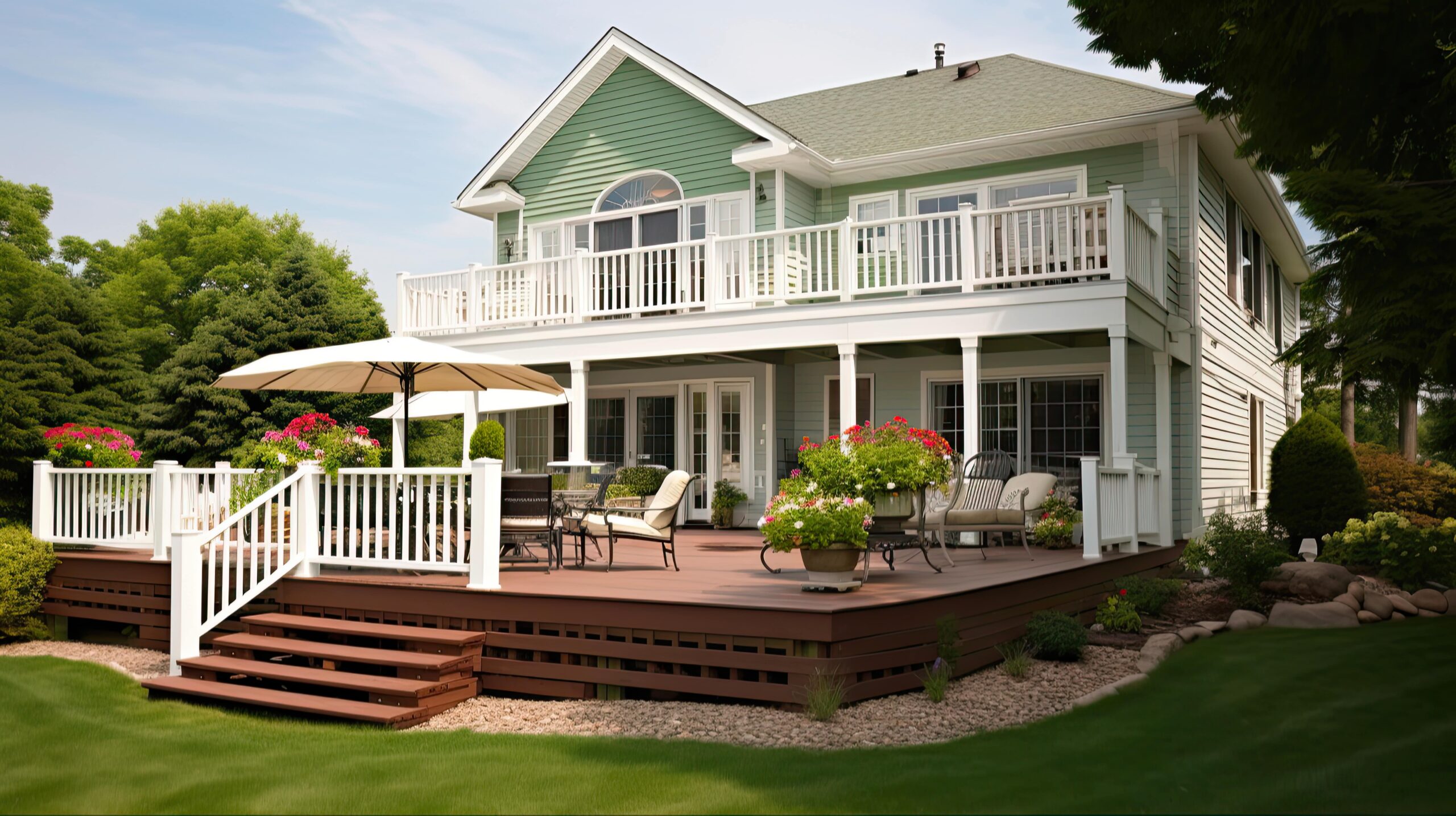
Built-In Benches
Built-in deck benches are integrated into the structure itself, often along the perimeter, in corners, or beside a dining area. They help maximize seating without filling the deck with extra furniture and can sometimes include storage compartments underneath. Once installed, though, changing or removing them usually requires some construction work.
Built-in benches work especially well on decks where you entertain large groups, want to make use of awkward corners, or need seating that is always available. Common designs include:
- Backless deck bench
- Curved deck benches
- Corner L-shaped deck benches
- Fire pit bench
- U-shaped deck benches
- Deck storage benches
- Planter benches
- Built-in dining benches
- Floating benches attached to built-in deck railing
- Deck bench railing
Outdoor Sectionals
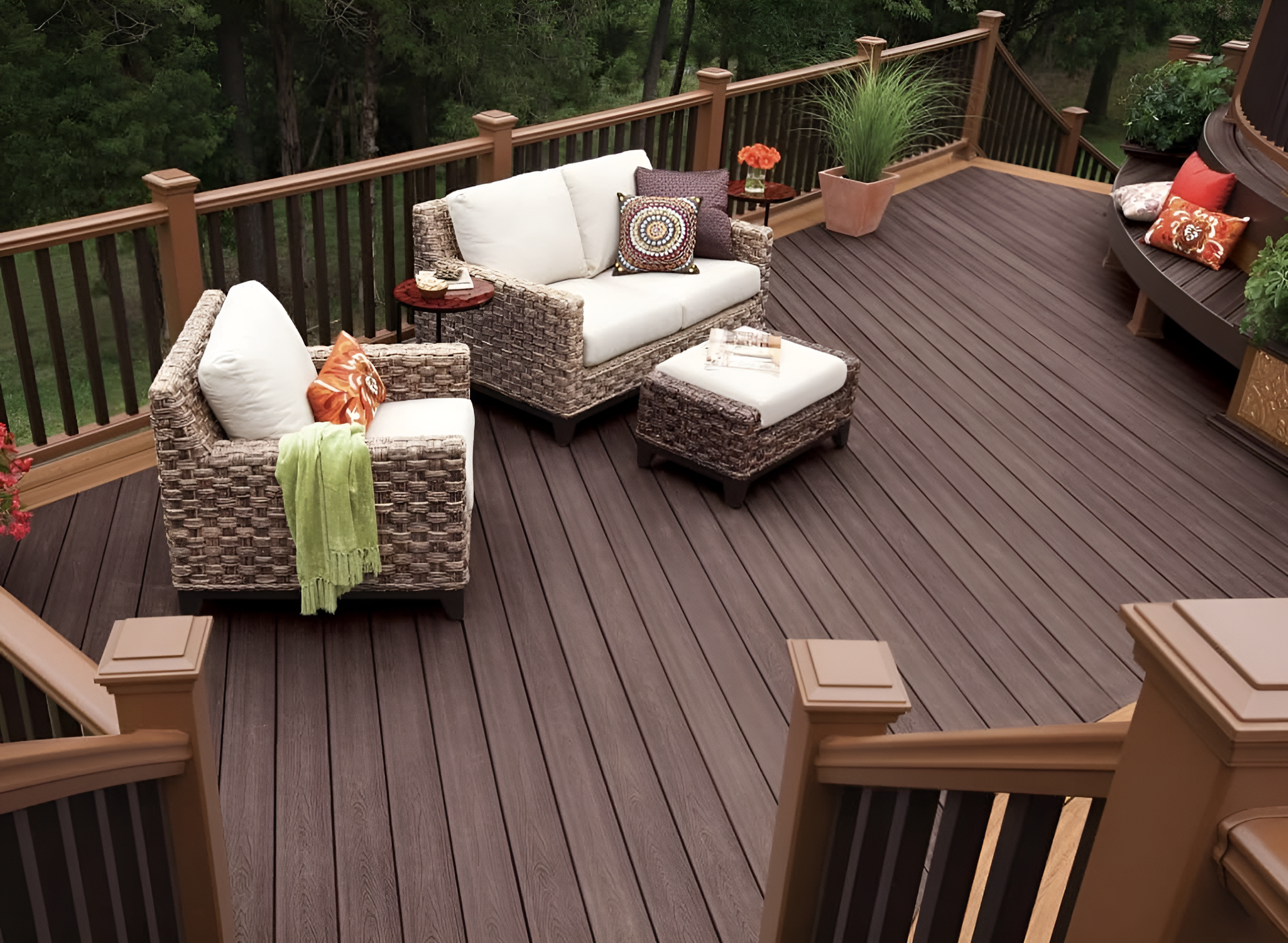
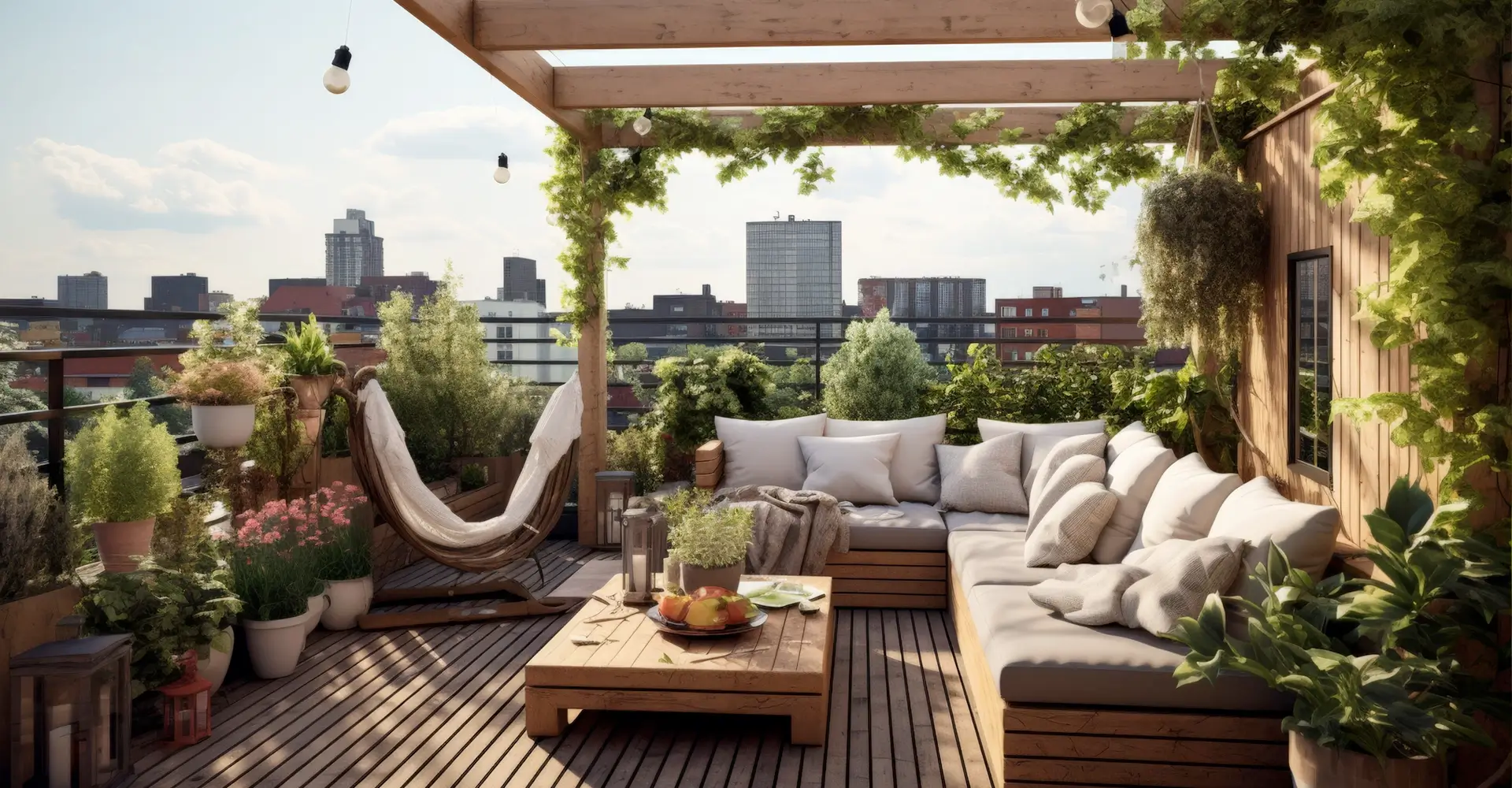
Outdoor sectionals are modular sofas designed for exterior use, usually made up of several connected or movable pieces. They are comfortable, seat several people at once, and naturally create a conversation area. Some modular designs can be rearranged, which gives you more flexibility than built-in seating. The main drawback is size, since sectionals can take up a large portion of the deck.
Sectionals work best on medium to large decks where lounging and conversation are a priority. Common configurations include L-shaped and U-shaped sectionals, chaise sectionals, and modular sets that can be split into separate seats. These options make it easier to shape the seating around a corner, fire feature, coffee table, or open view.
Outdoor Dining Tables and Chairs
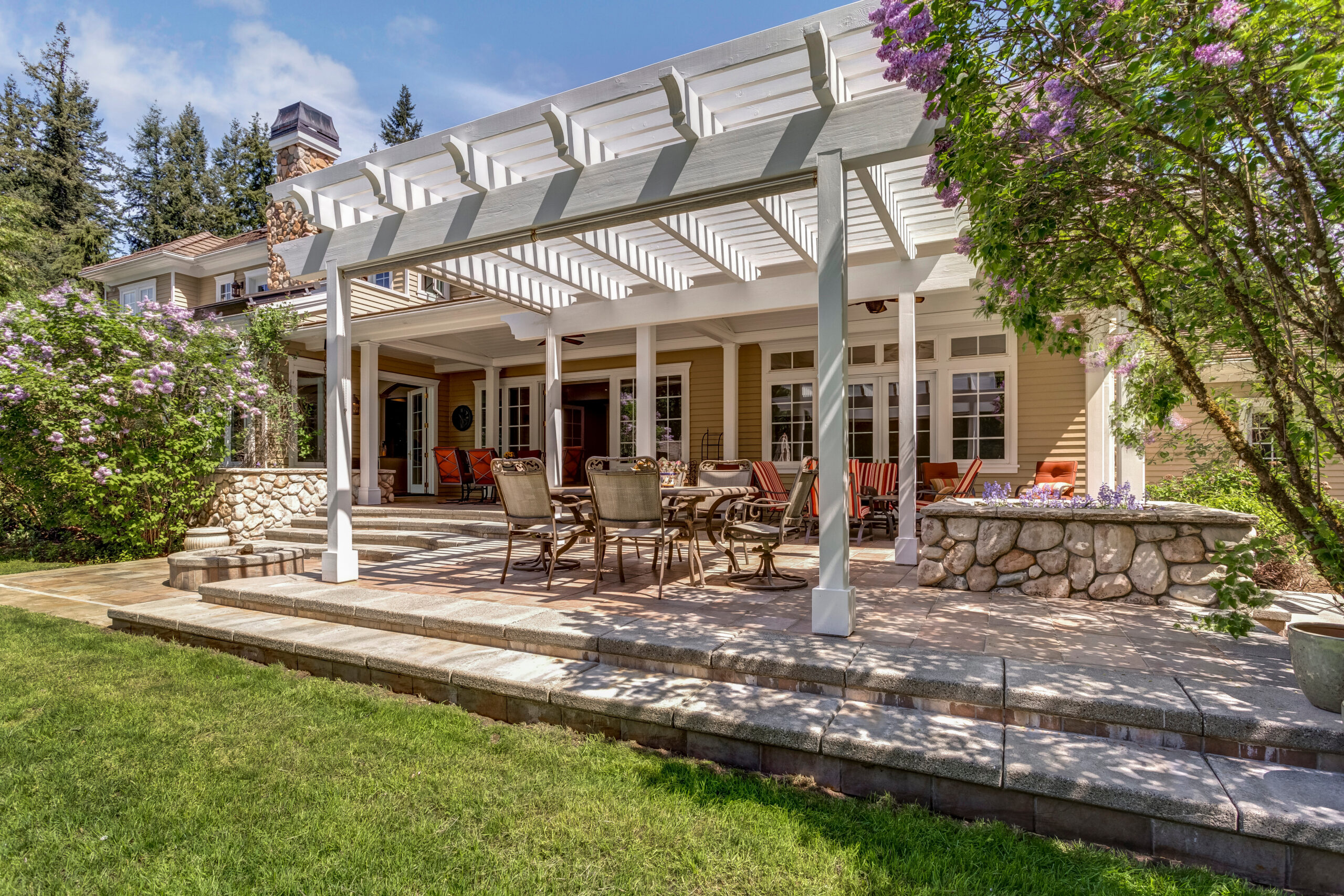
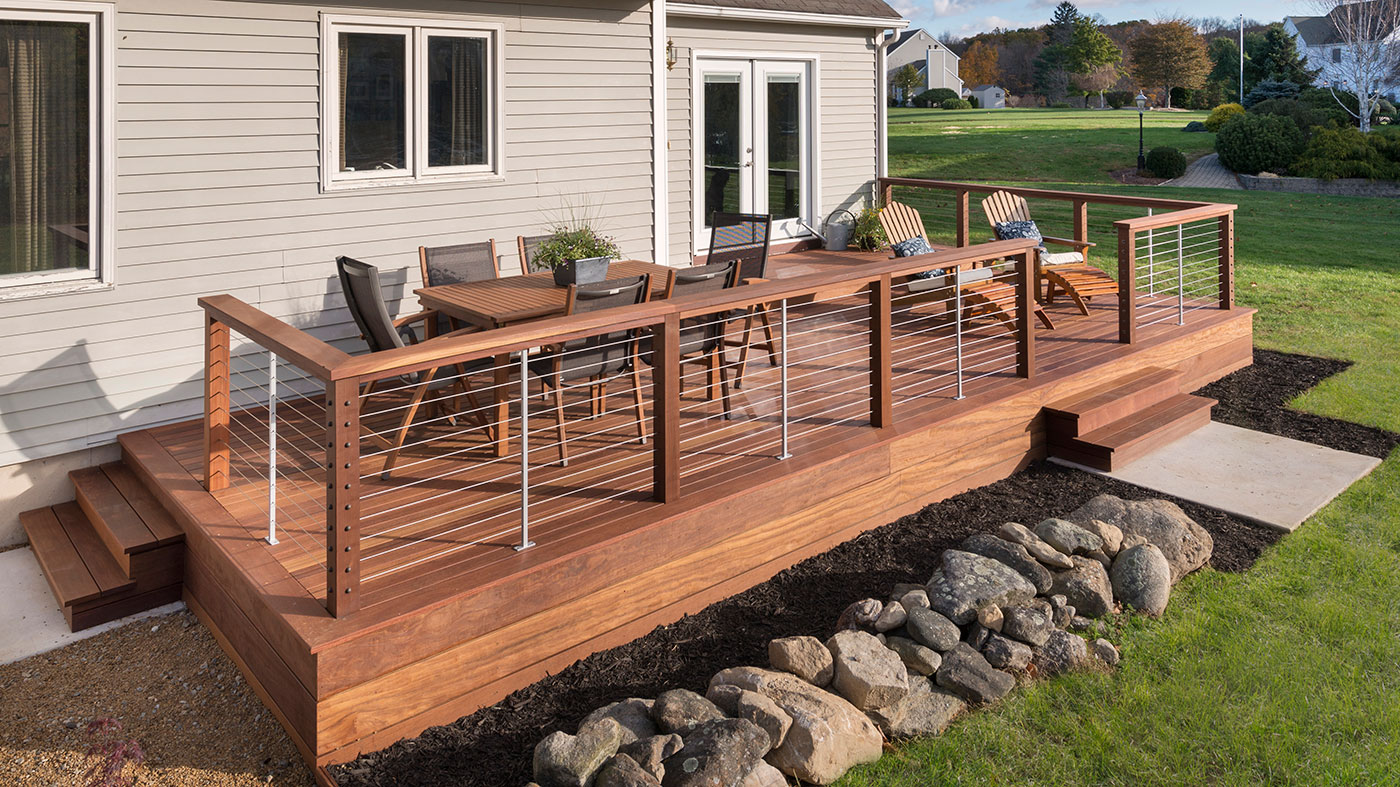
Outdoor dining tables and chairs give guests a dedicated place to eat, drink, play games, or spend time together. They are easy to rearrange, but they need enough clearance for people to pull out chairs and walk around the table. On smaller deck designs, a full dining set can take up a large share of the available deck space.
Options include dining armchairs, side chairs, and picnic benches. Because they are movable, you can group them around a table or fire feature or reposition them for shade and views.
Lounge Chairs
Lounge chairs provide individual seating that you can move and angle as needed. They are great seating for casual conversations and relaxation in small groups. But they can take up more floor space per person compared to shared seating arrangements.
They work best on decks where flexibility matters or where you want to create smaller conversation or relaxation areas. Common options include reclining lounge chairs, Adirondack-style chairs, chaise lounges, and cushioned club chairs. You can also group them around a coffee table, fire pit, or open view.
Movable Benches
Movable or freestanding deck benches provide seating for several people without permanently attaching anything to the deck. You can pull them up to a dining table, place them along a perimeter railing, or move them aside when you need more open floor space. Larger benches can be bulky, though, and backless models may be less comfortable for longer gatherings.
They work well as flexible dining seating, overflow seating, or extra seating along the deck’s edges. Common options include backless benches, benches with backs, storage benches, and lightweight dining benches that can shift between different areas as needed.
Ottomans and Poufs
Ottomans and poufs are compact, movable pieces that can work as extra seats, footrests, or small tables. They are useful when you need extra seating for occasional guests without taking up much room. The downside is comfort, since most don’t provide back support and aren’t ideal for long periods of sitting.
They work best alongside sectionals, lounge chairs, or other primary seating. Outdoor ottomans often have firmer frames and cushions, while poufs are softer and more casual. For deck use, choose options made with weather-resistant fabrics and materials that can handle moisture, sun, and regular outdoor exposure.
Bar or Counter Seating
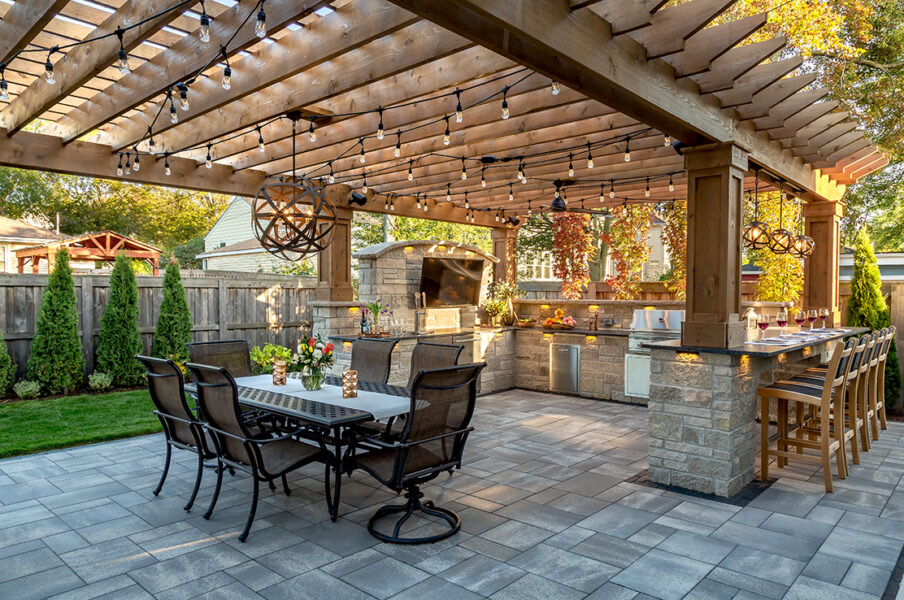
Bar or counter seating uses stools paired with a raised counter, outdoor kitchen, serving ledge, or built-in bar. It is a good way to add seats without taking up as much floor space as a full dining set. The main drawback is comfort, since taller stools can be harder to sit in for long periods and may not suit every guest.
This setup is especially useful near grills, beverage stations, and outdoor kitchens. Common options include backless stools, stools with backs, swivel stools, and fixed counter-height seating. It can also help separate cooking and seating areas without requiring another large piece of furniture.
How Different Deck Seating Materials Compare

Outdoor furniture materials differ in how they handle moisture, sunlight, heat, and regular use. Your choice also affects how much upkeep the seating needs, how easy it is to move, and how it looks alongside the deck.
Below are the benefits and drawbacks of different deck seating materials:
Teak, cedar, and eucalyptus offer a warm, natural appearance and work well with many deck styles. They can weather over time and may need periodic cleaning, sealing, or refinishing.
Often used for built-in benches because it can match the deck and requires less maintenance than wood. Composite deck benches resist rot and splintering, but it can cost more upfront and may become hot in direct sun.
This material resists moisture, rot, insects, and splintering with very little upkeep. It is durable but can be heavier and may not have the same natural look as wood.
Aluminum is lightweight, corrosion-resistant, and easy to move around the deck. Very light pieces may shift in strong winds, and exposed metal can become hot in direct sun.
Resin wicker over an aluminum frame gives sectionals, chairs, and benches a softer, more relaxed look. Quality matters, since lower-grade wicker can fade, crack, or become brittle after prolonged sun exposure.
How to Plan Deck Seating for Entertaining
- Available space: Choose seating that fits the deck shape without crowding the space or limiting usable floor area.
- Traffic flow: Keep clear paths between doors, stairs, cooking areas, and outdoor seating areas so guests can move around comfortably.
- Group size: Provide enough everyday seating for the number of people you usually host, then use movable pieces for occasional larger gatherings.
- Dining vs. lounging: Decide whether the deck needs to support meals, conversation, relaxation, or a mix of all three.
- Sun and shade: Place seating where guests will stay comfortable, especially during the hottest parts of the day.
Can You Add Built-In Seating to an Existing Deck?
Yes. Built-in seating can often be added to an existing deck, but you should first check that the framing, railings, and overall condition can support the addition. The layout also needs enough room to add seating without interfering with doors, stairs, or walkways.
Depending on the design, you may need additional blocking or framing beneath the bench. Older decks or benches tied into the railing system may require more extensive modifications.
Build a Space for Outdoor Entertaining with Nashville Deck Systems
Good deck seating should give guests somewhere comfortable to gather without making the space difficult to move through. Whether that means built-in benches, a dining area, lounge furniture, or a mix of seating types depends on your deck size and how you entertain.
Nashville Deck Systems can help you plan a deck around the seating, gathering spaces, and features you want to include. Contact our team to discuss your project and create an outdoor living space that is ready for guests.