
When Should You Repair or Replace an Existing Deck?

You can repair your existing deck when the damage is limited, and the underlying structure is still sound. Replacement makes more sense when the damage affects structural components, keeps recurring, or requires extensive repairs. Rebuilding may also be the better choice if you want major changes to the space’s size, layout, or design.
Nashville Deck Systems explains what to look for when deciding between repair and replacement and how to judge the extent of the damage. You’ll also learn how factors like the structure’s age, materials, repair costs, and plans can affect the decision.
What Are the Signs a Deck Needs Repairs?
Deck damage is not always obvious at first. Small changes in the boards, railings, fasteners, or drainage can be early signs that part of the structure needs attention. Watching out for the following signs can help you catch problems before they spread or create a bigger safety issue.
Damaged or loose boards
Cracked, warped, splintered, or lifting boards can create trip hazards and make the deck uncomfortable to use. These problems often come from moisture exposure, age, or failing fasteners and may worsen if left unaddressed.
Localized rot
Soft or deteriorated wood in one area can mean moisture has been sitting long enough to break down the material. If surface-level decay is caught early, the affected section may be repairable before the rot spreads to nearby boards or framing.
Loose railings or stairs
Movement in railings, handrails, or stair steps may signal fastener issues, weakened connections, or damaged wood. Because these areas help people move around the deck safely, even minor looseness should be checked promptly.
Rusting or loose fasteners
Corroded screws, nails, bolts, or connectors can lose strength and allow boards, railings, or other components to shift. Replacing damaged hardware early can help keep those connections secure and prevent further movement.
Worn surfaces
Fading, peeling stain, mildew, and minor checking can mean the surface’s protective finish is wearing down. Restoring the finish can help protect the wood from further moisture and sun exposure while improving its appearance.
Minor sagging or movement
A small amount of sagging, bouncing, or shifting may point to a damaged joist, loose connection, or weakened support. Even if the problem seems limited, it is worth checking before the movement becomes more noticeable.
Drainage-related damage
Standing water or consistently damp areas can encourage rot, mildew, and corrosion. Poor drainage can also keep moisture against the structure, increasing the chance of damage spreading over time.
Isolated insect damage
Holes, tunneling, or damaged wood can indicate termite infestation, carpenter ants, or other wood-damaging pests. The affected area may be repairable, but the pest activity should also be addressed so the damage does not continue.
Addressing these issues early can help keep minor damage from becoming more extensive. It can also prevent a small repair from turning into a larger, more expensive problem.
How Do You Assess the Extent of the Damage?

Once you spot a problem, focus on how far it has spread and whether it affects only the surface or the structure underneath. The more extensive or structural the damage is, the more it can affect the deck’s stability and safety. That helps you judge whether you are dealing with a small repair or a more serious issue.
- See how much of the structure is affected: A damaged board or one loose railing section can be a simple repair. But if the same problem appears in several areas, it can indicate a broader problem that needs immediate attention.
- Check how deep the damage goes: Minor rot or surface-level wear and tear is usually less serious than damage that reaches the joists, beams, posts, or ledger. Once the supporting structure is involved, the deck’s structural integrity may be affected.
- Look at how many parts are involved: Damage affecting several areas can weaken the deck in more than one place. The more components involved, the greater the risk of instability or unsafe use.
If the damage reaches structural components or you are unsure how far it extends, a professional inspection can help determine the scope and whether the structure is still safe.
How Do I Know When to Replace a Deck?
A deck replacement may be recommended when its structural damage is widespread, or repairs are extensive. At that stage, fixing individual problems may not restore the space reliably, and the money spent on repeated or extensive repairs may be better put toward a replacement.
Here are some of the signs that replacing the structure may make more sense than repairing it:
Major structural damage
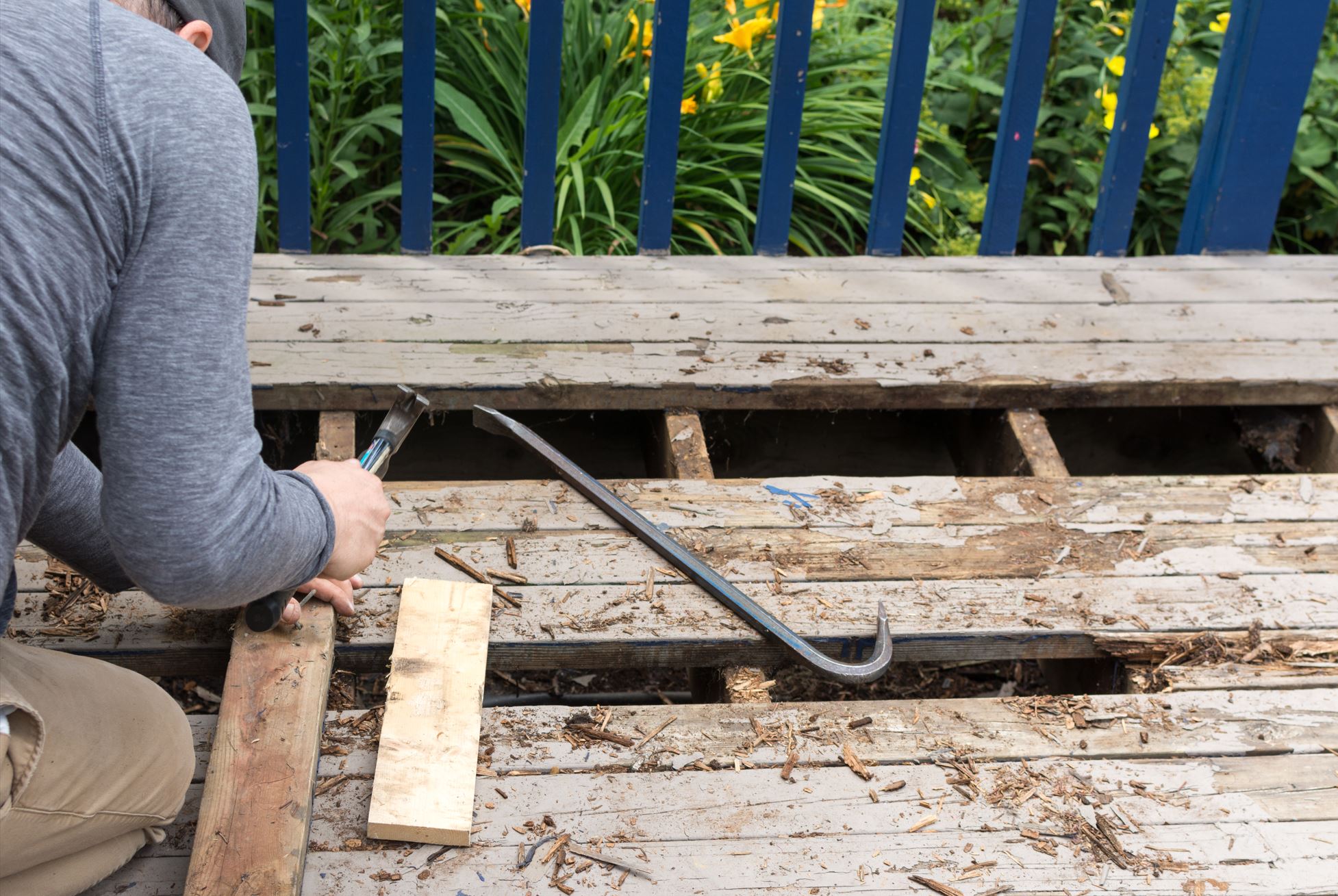
Cracked beams, weakened joists, damaged posts, failing footings, or problems with the ledger board can affect the structure’s overall stability. When several of these components are compromised, replacement may be safer and more practical than repairing them one at a time.

Significant sagging or movement
A deck that noticeably sags, shifts, or feels unstable underfoot may have problems with its framing, supports, or connections. This can point to a broader structural problem rather than a single loose board or worn railing support.
Extensive insect damage
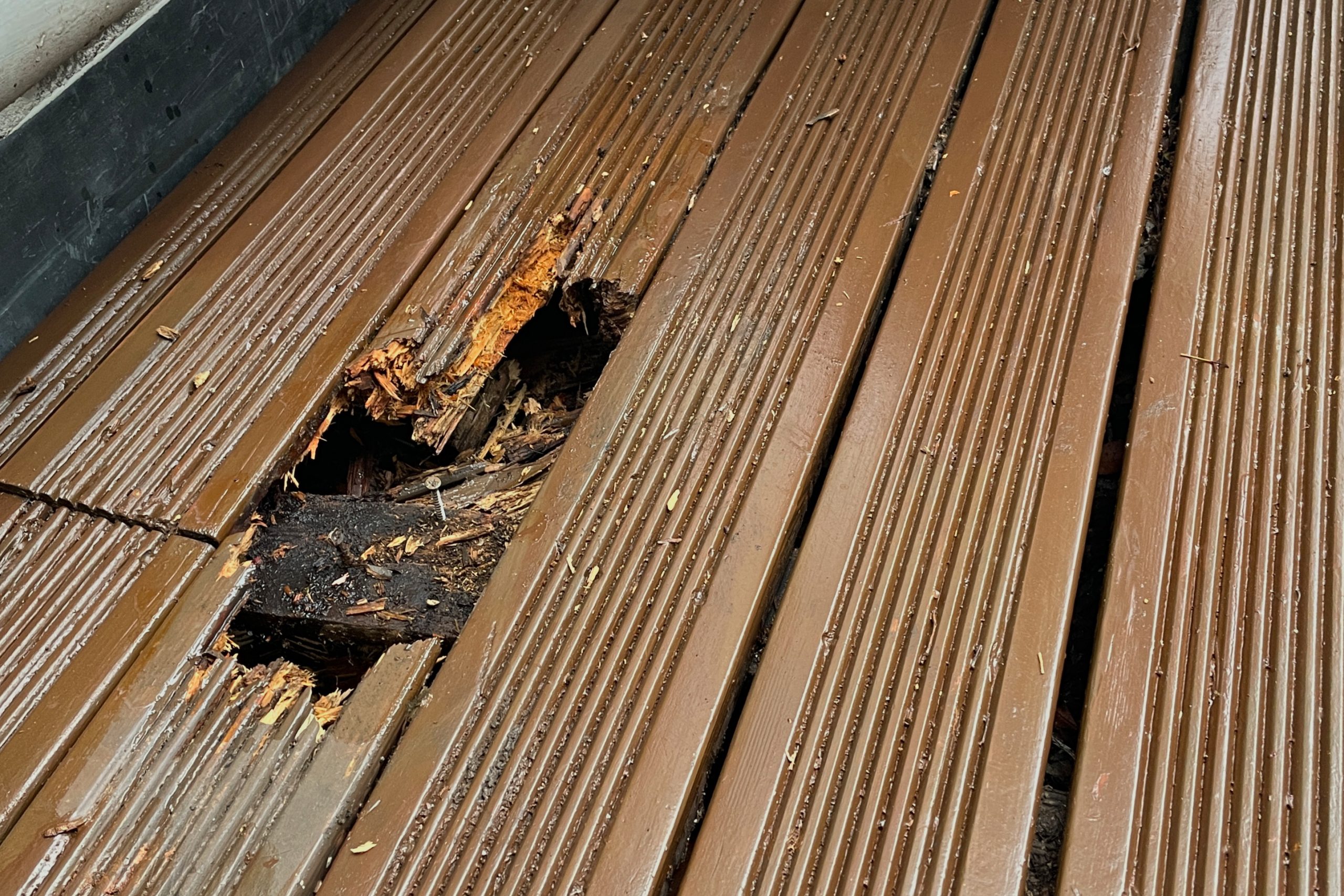
Termites, carpenter ants, or other wood-damaging pests can weaken the structure undetected. If several structural components are affected, replacing only the obvious damage may leave compromised wood behind.
Problems keep coming back
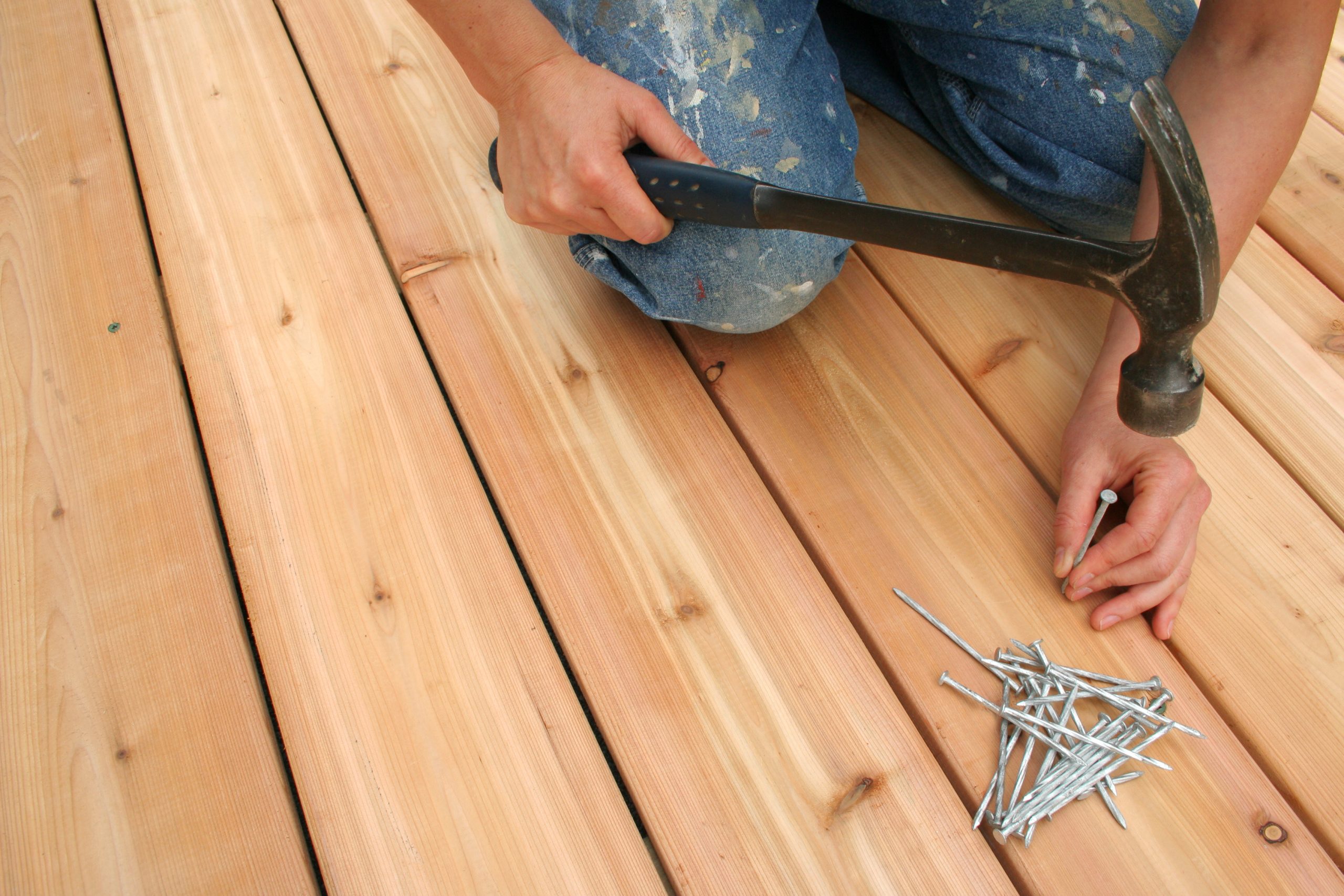
Repeatedly repairing boards, railings, stairs, rot, or other issues can indicate that the entire deck is deteriorating. At some point, continuing to patch individual problems may cost more over time than rebuilding.

Repairs would involve most of the deck
Even when the level of damage can technically be repaired, replacement may make more sense if large sections of decking boards, framing, supports, or railings would need to be removed and rebuilt. And, if it can be technically repaired but the cost is almost equal to that of a new deck, a replacement may offer better long-term outdoor enjoyment and usability.
Does the Decking Material Affect the Repair-or-Replace Decision?
- Wood: Wood decking can crack, warp, splinter, rot, or suffer insect damage. A few damaged boards may be easy to replace, but widespread decay in the framing or supports can make replacement more practical.
- Composite: Composite decking board material resists rot and splintering better than wood, so surface repairs may be less common. However, many composite decks still use wood framing underneath, which means the structure can deteriorate even when the decking surface looks fine.
- PVC: PVC decking is highly resistant to moisture, rot, and insects. If problems appear, they are more likely to involve fasteners, movement, surface damage, or the underlying frame rather than the plastic boards themselves.
- Aluminum: Aluminum does not rot or attract wood-damaging insects, but connections, fasteners, coatings, and structural supports can still wear or fail over time. Repair decisions usually depend more on the condition of those components than on the deck surface.
Material is only one part of making a practical decision. The structure’s age, repairability, and the condition of the structure underneath still matter just as much. Nashville Deck Systems can help you look at the full picture and decide whether a repair is enough or replacement makes more sense.
Does Deck Age Matter?
A deck’s age can provide useful context, but it should not decide the repair-or-replace question on its own. A well-built deck that has regular maintenance and upkeep may still be in good condition, while a newer structure can develop serious problems sooner if it was poorly built, poorly maintained, or exposed to persistent moisture.
Focus on the deck’s current condition, materials, maintenance history, and whether the framing and supports are still sound. Age matters most when it comes to recurring repairs, widespread wear and deterioration, poor maintenance, or structural problems.
Restore or Rebuild Your Outdoor Space with Nashville Deck Systems
The right decision comes down to how much of the deck is affected, whether the structure is still sound, and whether the expected life of the repair justifies the cost. Small, isolated issues may be worth fixing, while recurring or structural problems can make replacement the better long-term investment.
Nashville Deck Systems can perform a professional assessment of your existing deck, explain what needs attention, and help you decide whether repair or replacement makes the most sense. Contact our experts to get a structural review and honest recommendations, explore your restoration options, and determine the best way to move forward.